 Loading... Please wait...
Social Anxiety Test: How to Know If It's More Than Just Shyness
Posted on 4th Jun 2026
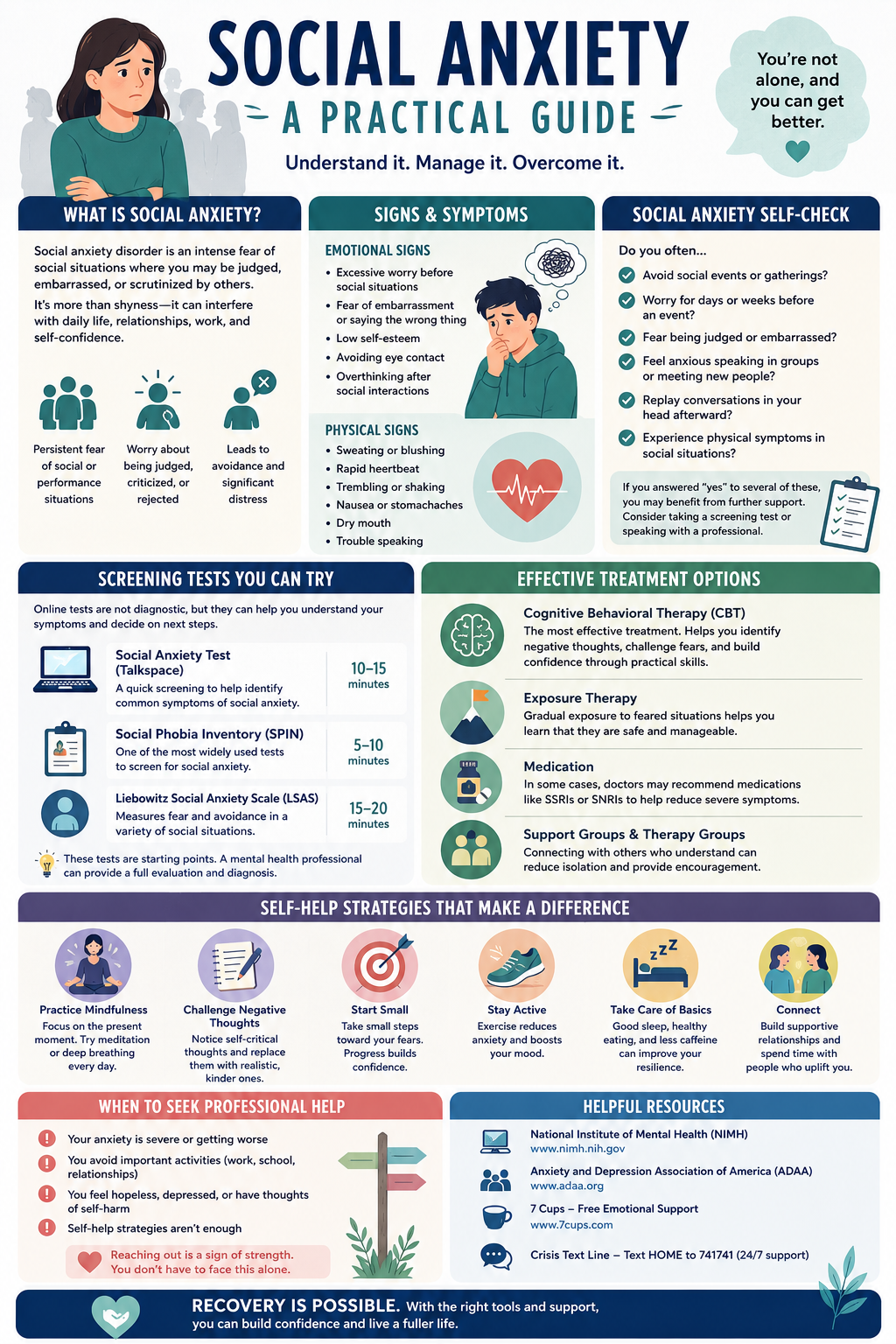
Most people feel nervous before a job interview, a first date, or speaking in front of a crowd. But for some, those feelings go much deeper. Social anxiety can make everyday situations feel overwhelming, causing intense worry before, during, and even after social interactions. Understanding the signs of social anxiety and knowing where to find help can make a significant difference in improving your quality of life.
Social anxiety disorder is one of the most common anxiety disorders worldwide. It involves a persistent fear of being judged, criticized, embarrassed, or rejected by others. This fear can affect work, school, relationships, and even simple activities like making phone calls, ordering food, or attending social gatherings.
One of the first steps in understanding whether social anxiety may be affecting you is taking a screening test. Online assessments are not diagnostic tools, but they can help identify patterns and symptoms worth discussing with a healthcare professional.
Several reputable social anxiety tests are available online. The Talkspace Social Anxiety Test provides a quick assessment of common symptoms. The Social Phobia Inventory (SPIN) is one of the most widely used screening tools by researchers and clinicians. The Liebowitz Social Anxiety Scale (LSAS) is another respected assessment that measures fear and avoidance across a variety of social situations. While these tests cannot diagnose social anxiety disorder, they can provide valuable insight into how anxiety may be impacting your daily life.
You may want to consider taking a social anxiety test if you frequently avoid social situations, worry excessively about what others think of you, replay conversations repeatedly after they happen, fear public speaking, struggle to meet new people, or experience physical symptoms such as sweating, trembling, nausea, blushing, or a racing heart during social interactions.
Many people assume they are simply shy when they actually have social anxiety. The difference is often the level of distress and how much it interferes with daily functioning. Someone who is shy may feel uncomfortable initially but can usually adapt to social situations. Someone with social anxiety may experience significant fear that leads to avoidance or ongoing distress.
The encouraging news is that social anxiety is highly treatable. Cognitive Behavioral Therapy (CBT) is considered the most effective psychological treatment. CBT helps people identify negative thought patterns, challenge unrealistic fears, and gradually build confidence in social situations. Numerous studies have found CBT to be one of the most successful long-term treatments for social anxiety disorder.
Exposure therapy is another powerful tool. Rather than avoiding feared situations, individuals work through them gradually and systematically. For example, someone who fears making phone calls might start by leaving a voicemail, then making a short call to a friend, and eventually handling more challenging conversations. Over time, the brain learns that these situations are not as dangerous as they initially seem.
Mindfulness can also help reduce social anxiety. Anxiety often involves worrying about future events or dwelling on past interactions. Mindfulness practices encourage people to focus on the present moment rather than getting caught up in self-critical thoughts. Even a few minutes of daily meditation or breathing exercises can help reduce anxiety symptoms.
There are also many self-help resources available for people who want to start working on social anxiety today. Books such as "The Shyness and Social Anxiety Workbook" by Martin Antony and Richard Swinson are frequently recommended by therapists. Mobile apps like Headspace, Calm, and Insight Timer offer guided meditations and anxiety-management exercises. Online support communities can provide encouragement and help people realize they are not alone in their experiences.
Lifestyle habits can have a surprising impact as well. Regular exercise has been shown to reduce anxiety symptoms by improving mood and lowering stress hormones. Quality sleep, balanced nutrition, limiting excessive caffeine intake, and maintaining social connections can all contribute to better mental health and emotional resilience.
If symptoms are severe or significantly affecting your life, seeking professional help is strongly recommended. A licensed therapist, psychologist, psychiatrist, or primary care physician can help determine whether social anxiety disorder is present and recommend appropriate treatment options. Some individuals may benefit from medication, particularly when symptoms are severe or occur alongside other mental health conditions.
The most important thing to remember is that social anxiety is not a personal weakness or character flaw. It is a recognized and treatable mental health condition. Taking a social anxiety test can be a helpful starting point, but meaningful improvement often comes from learning practical coping skills, challenging anxious thoughts, and seeking support when needed. With the right tools and guidance, many people who once felt trapped by social anxiety go on to build confidence, develop stronger relationships, and participate more fully in life.
Recent Posts
- » Best Online Therapy Platforms for Anxiety in 2026
- » Social Anxiety Test: How to Know If It's More Than Just Shyness
- » Foods That Help Reduce Anxiety: A Complete Guide to Eating for Mental Wellness
- » Headspace Review: Is This Popular Wellness App Worth the Subscription?
- » Coffee and Heart Health: Could Your Daily Cup Help You Live Longer?