 Loading... Please wait...
Blog - study
Coffee and Heart Health: Could Your Daily Cup Help You Live Longer?
Posted on 1st Jun 2026
For years, coffee has been caught in a tug-of-war between health warnings and health benefits. Some people worry that caffeine raises blood pressure or stresses the heart, while others swear by their morning brew. New research suggests the relationship between coffee and cardiovascular health may be more positive than many people realize.
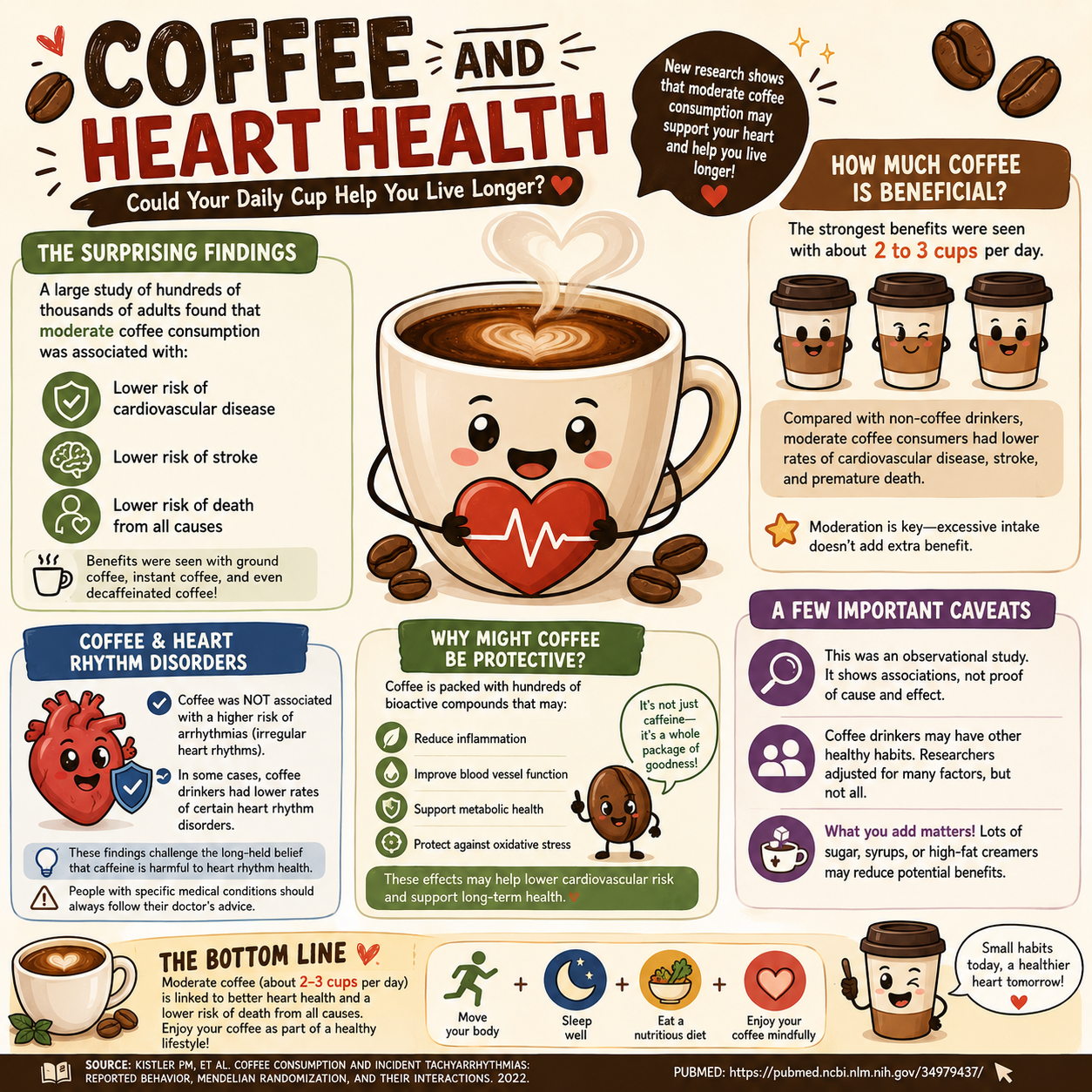
The Surprising Findings About Coffee and Longevity
Researchers analyzed health data from hundreds of thousands of adults to examine how coffee consumption affected cardiovascular disease, heart rhythm disorders, and overall mortality. The results were encouraging for coffee lovers.
The study found that moderate coffee consumption was associated with a lower risk of cardiovascular disease and a reduced risk of death from all causes. Interestingly, these benefits were observed across multiple types of coffee, including ground coffee, instant coffee, and even decaffeinated coffee.
How Much Coffee Appears to Be Beneficial?
The strongest benefits were generally seen among people drinking approximately two to three cups per day.
Compared with non-coffee drinkers, moderate coffee consumers experienced lower rates of cardiovascular disease, stroke, and premature death. Researchers noted that the relationship followed a "sweet spot" pattern, where moderate intake appeared most beneficial.
This doesn't necessarily mean more coffee is always better. While coffee was not associated with major cardiovascular harm in most people, the greatest benefits were consistently linked to moderate consumption rather than excessive intake.
Coffee and Heart Rhythm Disorders
One of the more surprising findings involved arrhythmias, or irregular heart rhythms.
For years, many people with heart palpitations have been told to avoid caffeine. However, the study found that coffee consumption was not associated with a higher risk of arrhythmias. In some cases, coffee drinkers actually showed lower rates of certain heart rhythm disorders.
While individuals with specific medical conditions should still follow their healthcare provider's advice, these findings challenge the long-standing belief that coffee is inherently harmful to heart rhythm health.
Why Might Coffee Be Protective?
Coffee contains far more than caffeine. A typical cup contains hundreds of biologically active compounds, including polyphenols, antioxidants, magnesium, and other plant-based substances.
Researchers believe these compounds may help reduce inflammation, improve blood vessel function, support metabolic health, and protect against oxidative stress. These mechanisms could help explain why moderate coffee consumption is repeatedly associated with lower cardiovascular risk in large population studies.
A Few Important Caveats
It's important to remember that this was an observational study. Researchers identified associations, not proof of cause and effect.
Coffee drinkers may differ from non-drinkers in other ways, including diet, exercise habits, and overall lifestyle. While researchers adjusted for many of these factors, observational studies cannot completely eliminate all potential confounding variables.
Additionally, what you add to your coffee matters. Large amounts of sugar, flavored syrups, and high-fat creamers may reduce some of coffee's potential health benefits.
The Bottom Line
The growing body of research suggests that moderate coffee consumption is not only safe for most people but may actually support cardiovascular health and longevity. Drinking around two to three cups per day appears to be associated with lower risks of heart disease, stroke, and premature death.
While coffee is not a substitute for healthy habits such as exercise, quality sleep, and a nutrient-rich diet, your daily cup may be doing more than simply helping you wake up—it could be contributing to long-term heart health.
Source
Kistler PM, et al. Coffee consumption and incident tachyarrhythmias: reported behavior, Mendelian randomization, and their interactions. Published in 2022. Available through the U.S. National Library of Medicine PubMed database: https://pubmed.ncbi.nlm.nih.gov/34979437/

Study Finds Genetic Link To Hangovers
Study Finds Genetic Link To HangoversBarrel fever. The brown bottle flu. A bad case of the night before. No matter what you call the parade of aches, pains, nausea, exhaustion and irritability that follows a night of heavy drinking; there's nothing quite like a bad hangover to make you seriously question your fitness as a [...]
Recent Posts
- » Best Online Therapy Platforms for Anxiety in 2026
- » Social Anxiety Test: How to Know If It's More Than Just Shyness
- » Foods That Help Reduce Anxiety: A Complete Guide to Eating for Mental Wellness
- » Headspace Review: Is This Popular Wellness App Worth the Subscription?
- » Coffee and Heart Health: Could Your Daily Cup Help You Live Longer?